With enthusiasm, let’s navigate through the intriguing topic related to Navigating the C++ Map: Accessing Keys and Values. Let’s weave interesting information and offer fresh perspectives to the readers.


The C++ std::map is a powerful container that provides an efficient way to store and retrieve data in key-value pairs. Its key strength lies in its ability to maintain sorted order based on keys, allowing for rapid search and retrieval operations. Understanding how to access and manipulate these key-value pairs is crucial for utilizing the full potential of the std::map.
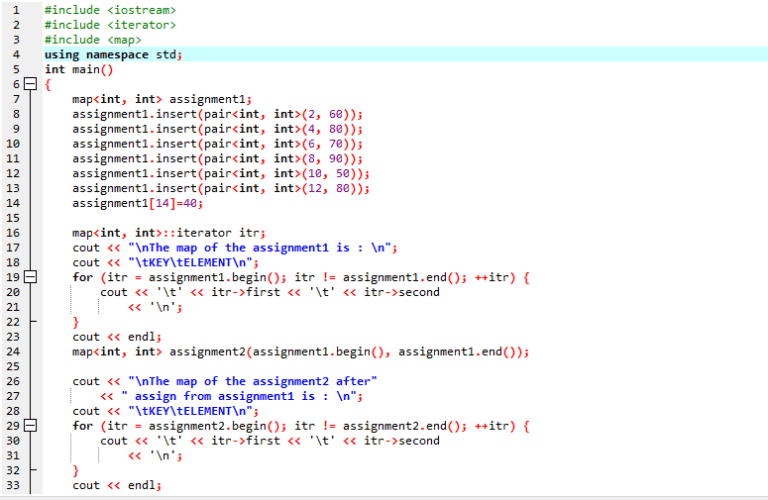
The std::map container in C++ operates on the principle of associating a unique key with a corresponding value. This association allows for efficient lookups, as the key acts as a direct index to retrieve the associated value. The keys within a std::map are always sorted in ascending order, ensuring that searching and retrieval operations are optimized for performance.
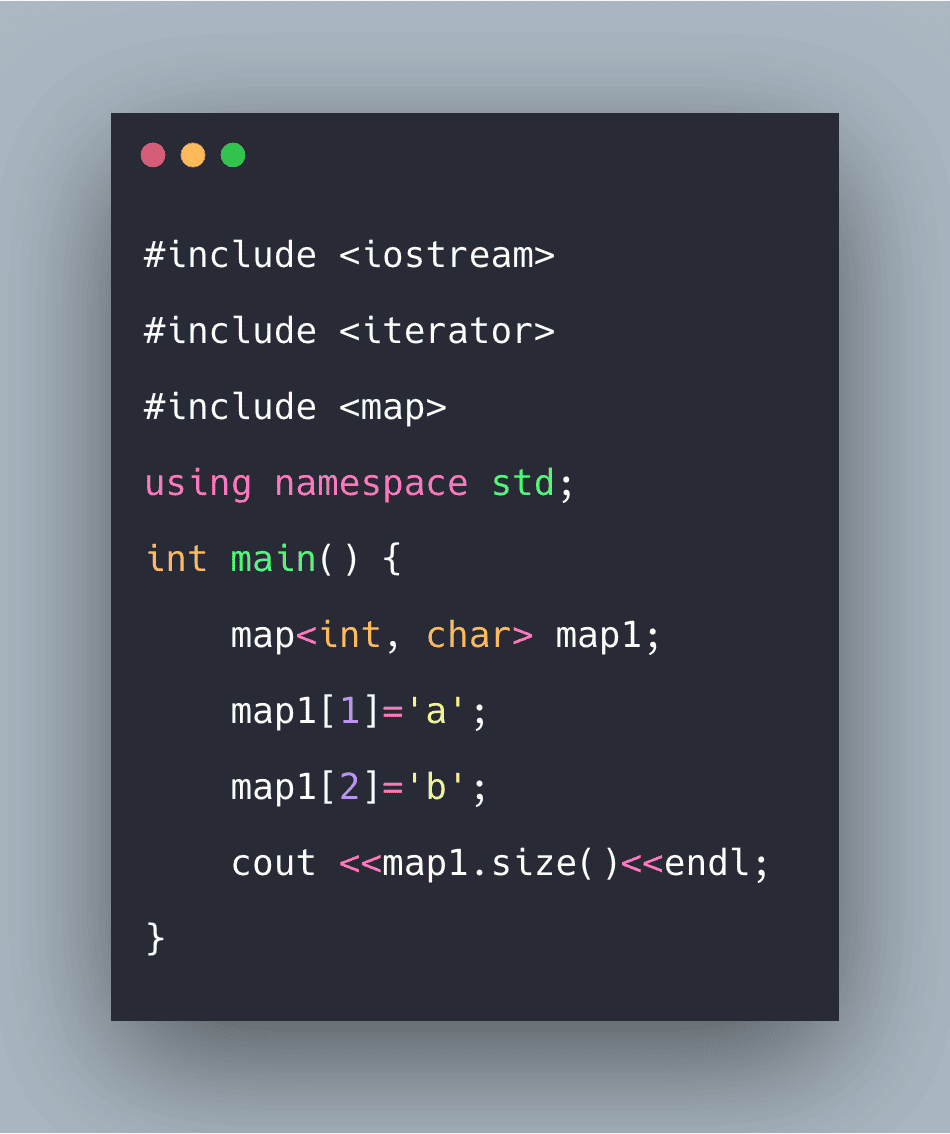
The most straightforward method for retrieving a value from a std::map is using the key itself. This is achieved through the operator[] overload, which allows direct access to the value associated with a given key. If the key exists within the map, the corresponding value is returned. However, if the key is not found, a new key-value pair is automatically created with the specified key and a default-constructed value of the associated data type.
In the above example, studentScores["Alice"] retrieves the value associated with the key "Alice," which is 95. Attempting to access a non-existent key like "David" results in the creation of a new entry with "David" as the key and a default value of 0 for the int data type.
While the operator[] provides a convenient method for accessing values, it can lead to unexpected behavior when dealing with non-existent keys. To ensure safe retrieval and avoid accidental key creation, the at() method is recommended. This method throws a std::out_of_range exception if the specified key is not found in the map, preventing potential errors and ensuring code robustness.
![Accessing sub keys/values in a map[string]interface variable - Getting Assist - The Dev News](https://forum.golangbridge.org/uploads/default/optimized/2X/f/f3e85c1896813e3be3ddaf0360c1d359a25c2ec3_2_1024x635.png)
In this code, studentScores.at("Alice") retrieves the value for "Alice" safely. However, accessing "David" using at() triggers an exception, providing clear indication of the key’s absence.

To access all key-value pairs within a std::map, the begin() and end() iterators are used. These iterators point to the beginning and end of the map, respectively, allowing for traversal through the sorted key-value pairs.

This code iterates through the studentScores map, printing each key-value pair in sorted order based on the keys.
Once a key-value pair is inserted into a std::map, the associated value can be modified by directly accessing it using the key and assigning a new value.
To determine if a specific key exists within a std::map, the count() method can be used. This method returns 1 if the key is found and 0 otherwise.
This code checks if the keys "Alice" and "David" exist within the studentScores map. The output will only confirm the existence of "Alice" as "David" is not present.
The std::map container provides a highly efficient way to store and retrieve data, particularly when dealing with large datasets. Its key-based access mechanism ensures fast lookups, making it a valuable tool for applications requiring quick retrieval of information.
1. What happens if I try to access a non-existent key using operator[]?
When using operator[] to access a non-existent key, a new key-value pair is automatically created with the specified key and a default-constructed value of the associated data type. This behavior can be useful in certain scenarios, but it’s crucial to be aware of it to avoid unintended side effects.
2. Is there a way to access a value without creating a new entry if the key doesn’t exist?
Yes, the find() method can be used to check if a key exists within the map. If the key is found, it returns an iterator pointing to the key-value pair. Otherwise, it returns an iterator pointing to the end of the map.
The erase() method can be used to remove a key-value pair from a std::map. It accepts a key as an argument and removes the corresponding entry.
Yes, you can use std::map to store data of different types by specifying the desired data types for the key and value within the template parameters. For example:
This code demonstrates storing student names (strings) as keys and their corresponding GPAs (doubles) as values.
The C++ std::map container offers a powerful and efficient way to store and retrieve data in key-value pairs. Understanding how to access keys and values within a std::map is essential for leveraging its capabilities and optimizing data management within your C++ applications. By utilizing the provided methods and techniques, you can effectively navigate and manipulate data within this versatile container, enhancing the performance and reliability of your code.

Thus, we hope this article has provided valuable insights into Navigating the C++ Map: Accessing Keys and Values. We appreciate your attention to our article. See you in our next article!
Your email address will not be published.